
In the cooling sector, a door is not merely an entryway, but a thermal valve. Here, Adam Mann, Engineering Manager at GB Controls, explores how advanced door controls serve as the primary safeguard against ‘thermal drift’, preventing the catastrophic energy loss and equipment strain that occurs when the cold chain is breached.
The global cooling sector, spanning food processing, pharmaceuticals, chemical storage, and logistics, is one of the most energy-intensive industries in the world. To maintain the integrity and safety of countless perishable and temperature-sensitive products, refrigeration systems work nonstop, consuming vast amounts of electricity. While insulated panels, efficient compressors, and advanced refrigerants are rightly celebrated, the single most critical, yet often overlooked, component in maintaining a stable cold environment is the door control system.
A cold room door is not just a physical barrier; it is the most significant thermal weak point in the entire structure. In a world demanding greater sustainability, lower operational costs, and absolute consistency in product quality, door controls transform a liability into a highly controlled asset. Their importance extends across four pillars: unparalleled energy efficiency, absolute product integrity, optimised system performance, and regulatory compliance.
The energy efficiency imperative
The primary reason door controls are essential is the dramatic impact a door opening has on energy consumption. The physics of air exchange dictates that cold, dense air inside a chiller or freezer flows out immediately upon opening, to be replaced by warmer, more humid ambient air.
This air exchange sets off a costly chain reaction: Increased Thermal Load: The warm air entering the cold room must be cooled back down to the target temperature. This forces the refrigeration unit to run longer and harder, directly increasing electricity usage and driving up utility bills. For large industrial sites, these energy savings can be significant, with some studies suggesting that effective control systems can reduce energy consumption by up to 17%.
The Problem of Moisture and Ice: The incoming air is not just warm; it is also humid. As this moisture cools, it condenses and then freezes, depositing ice and frost onto the evaporator coils. This is perhaps the single biggest threat to system efficiency. Ice acts as an insulator, reducing the evaporator’s ability to extract heat from the room, forcing the compressor to work even harder for diminishing returns.
The Solution is Time and Design: Door control mechanisms are fundamentally about controlling time. Studies suggest the first 7 to 10 seconds of an opening are the most critical period for heat loss. Consequently, door systems are designed to minimise this exposure.
Modern door control technology addresses this through design and mechanism:
High-Speed Doors: These are designed with rapid open/close cycles, sometimes using automated sensors, to ensure the door is only open for the absolute minimum time necessary for passage.
Insulation and Seals: Control starts with the door itself. High-quality cold storage doors utilise advanced insulating materials and airtight, perimeter sealing systems to provide a high thermal resistance (low U-value) when closed, preventing energy leakage (air infiltration).
Air Separation: In high-traffic environments, air curtains or specialist air separation technology create an invisible barrier across the doorway. This mitigates the exchange of air masses, sometimes requiring a warm airstream on the cold side to actively “demist” the doorway and prevent fog or ice formation at sub-zero temperatures.
Safeguarding product integrity and system performance
In industries governed by the cold chain, temperature consistency is non-negotiable. Any fluctuation can have catastrophic financial and safety consequences.
Risk of Spoilage: For food and beverage products, an unexpected temperature rise accelerates bacterial growth and spoilage, leading to massive stock losses and threats to public health. Pharmaceuticals and vaccines also require strict temperature control to ensure their efficacy and safety before they reach the consumer. Door controls ensure this stability by drastically limiting the thermal impact of access.
Reduced Maintenance and Downtime: The ice build-up caused by air infiltration does more than just reduce efficiency – it creates a maintenance burden. Frequent ice accumulation necessitates regular manual scraping or costly, energy intensive defrost cycles, leading to significant downtime for the facility. By minimising warm air ingress, effective door controls reduce the frequency of maintenance issues, protecting the lifespan of all refrigeration components.
Compliance and Safety: Cold storage facilities must adhere to stringent regulations like the Hazard Analysis and Critical Control Point (HACCP) system. Door controls are a key factor in proving compliance by maintaining the required temperature envelope. Furthermore, door safety features, such as emergency release mechanisms, secure locking systems, and quick exit capability, are essential to protect personnel working in the often-harsh, temperature-controlled environment.
Behavioural controls and automation
Even the most technically superior, well-insulated door is only as good as the operating policy governing it. Human error – staff inadvertently leaving a door ajar while moving pallets or being distracted – is a constant source of energy waste. This is where active door control systems become paramount.
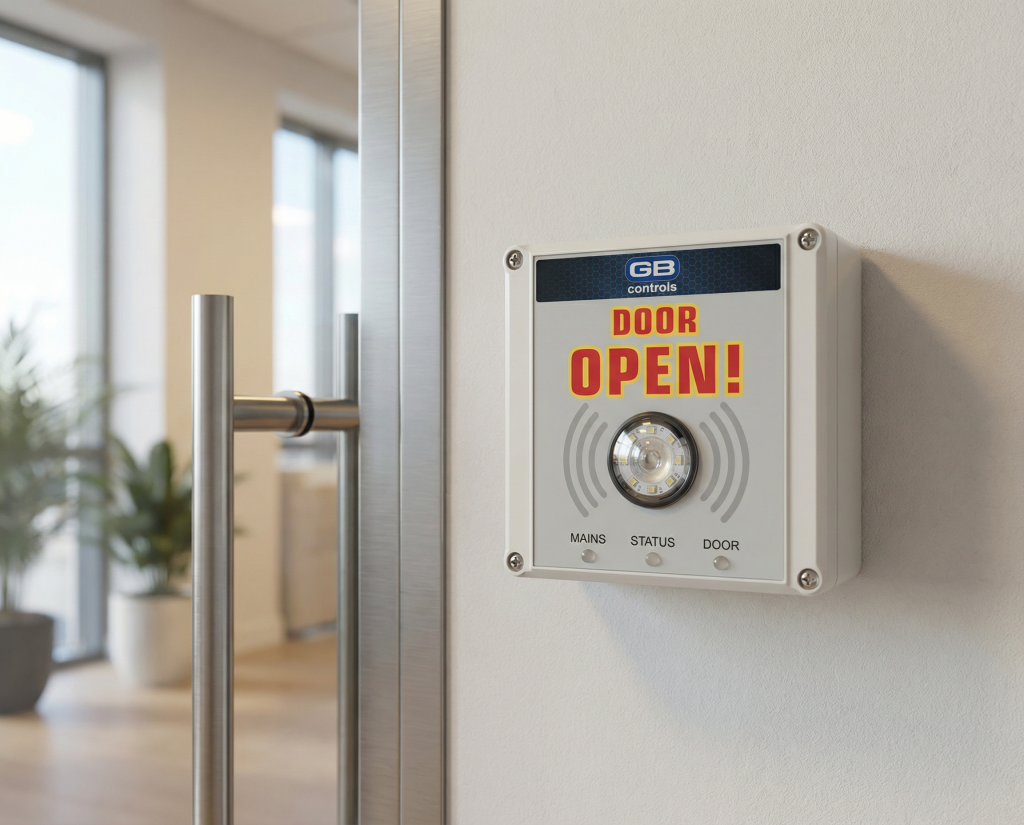
Door Open Alarms are an example of a simple but highly effective behavioural control. These systems use sensors to monitor door position and trigger an immediate, loud, and sometimes custom-voiced audible alarm if the door remains open past a pre-set threshold time. This immediate feedback compels staff to close the door, instituting a ‘Good Cold Room Door Policy’ where human behaviour is managed by technology.
In conclusion, door controls are the active, dynamic barrier that sustains the entire cooling environment. From the basic construction of insulated panels and airtight seals to advanced high-speed mechanisms and audible alarm systems, every aspect of door control is focused on one goal: maintaining the critical thermal separation with maximum efficiency. By investing in these technologies, businesses not only slash energy costs and reduce their carbon footprint but also secure their most valuable assets – their temperature sensitive products – ensuring quality, safety, and long-term profitability.